Performance Diagnostic

Performance Diagnostic

What looks like nerves, memory problems, or inconsistency is usually where the playing stops holding together.

When practice doesn’t transfer into the result you want
— this is where we fix it.

We identify what the music demands, how the sound is produced, and where it breaks in real conditions.
Then we rebuild it at the source.

What this is

An intensive consultation focused on one specific problem in your playing.

Not a replacement for regular lessons — but something more advanced students take from time to time to solve problems that don’t shift in weekly work.

This approach developed from working this way with advanced students where targeted intervention was needed.

The format depends on the problem: in London, live online, or via recorded video submission for detailed analysis.

How we work

The musical demand is defined first

Sound is assessed against that demand

Breakdown points are identified at the level of control, not surface errors

Mechanical causes are isolated and rebuilt to support the intended sound

The result is tested in real conditions, not protected conditions

This work draws on a broader performance system developed within The Masters Music School.

Results

The sound becomes coherent and intentional

What works in isolation transfers into the full texture

Control remains stable as speed and context change

Memory remains reliable under changing conditions, not only in familiar ones

Interpretation is constructed and delivered, not guessed

Diagnostic Guide

It works. Until it doesn’t.

Controlled practice often appears stable — until tempo, pressure, or context change.

Nothing obvious breaks, but control drops, memory becomes unreliable, and the sound no longer carries the musical idea.

This guide shows what changes between practice and performance — and how to build control that remains stable when conditions change.

  • Why slow, controlled practice stops transferring at tempo
  • What changes under pressure — and why it exposes instability
  • How memory fails when conditions shift
  • How to align technique with sound, not just movement
  • How to build control that survives performance conditions

Apply this to a specific passage or performance:

Apply this in a diagnostic session

Where this work has held under pressure

Performance, competitions, and conservatoire entry

International 1st Prize (Gold)

Music Stars and Awards (Mateusz Skowera)

1st Prize (Gold)

West London Pianoforte Festival (Jason Huang)

1st Prize (Gold)

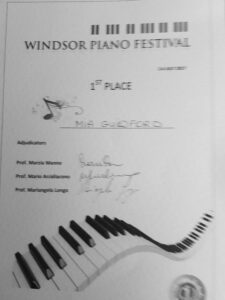
Windsor Piano Festival (Mia Guildford)

EPTA Cup & 1st Prize (Gold)

Kingston Young Musician (Margaret Pardoe)

Successful Masters' entry audition

Trinity Laban Conservatoire (Melody Huang)
Certificates

Professional Context

Education

Royal College of Music, London

Master of Performance (Distinction, 2012)

Recipient of major UK and international scholarships

Awards

Gold Medal CD

awarded highest recognition for recorded performance quality

International prizes and festival awards across Europe and the UK

Leadership

Artistic Director

The Masters Music School

Developer of a unique piano curriculum integrating technique, repertoire, and performance culture

The Masters Music School

Describe where the playing stops holding together.

Include what breaks, when it happens, and what you’ve already tried.

I’ll respond with how I would approach it.

Share: